
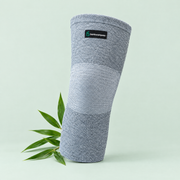




Search for the best knee compression sleeve for arthritis and you will find hundreds of nearly identical black sleeves, a lot of promises about copper, and very little about what actually makes one sleeve more comfortable than another. This guide cuts through that. It covers what a knee sleeve can and cannot do for an arthritic knee, what the research says about compression, why so many people stop wearing their first sleeve after a week, and how the three common materials (neoprene, copper-infused synthetics and bamboo viscose) compare in real life.
The short answer
A soft knee compression sleeve can make an arthritic knee feel warmer, steadier and less achy during everyday activity, and it is one of the lowest-risk things you can try. It does not treat arthritis or slow it down. The feature that matters most is not copper, "medical grade" claims or how tight it is. It is whether the sleeve is comfortable enough that you keep it on. That usually comes down to breathability, a slim fit that does not slide, and gentle rather than aggressive compression. For most people with everyday knee arthritis, a breathable knit sleeve beats a thick neoprene one, and copper adds nothing you can measure.
What a knee compression sleeve does for arthritis
A compression sleeve is a tube of stretchy fabric that hugs the knee. It does not hold the joint in position the way a hinged brace does. What it provides is gentle, even pressure, a little warmth and constant light feedback from the skin around the joint. People with knee osteoarthritis commonly describe three things when they wear one:
- The knee feels "held together." Pressure on the skin improves the sense of where the joint is in space, which many people experience as steadiness on stairs and uneven ground.
- Less stiffness in the first minutes of moving. Warmth helps a stiff joint loosen up, which is why morning stiffness and cold-weather aches are the most common reasons people buy a sleeve.
- Less of the puffy, heavy feeling at the end of the day. Light compression can limit mild swelling around the knee after a long walk or a day on your feet.
Two things a sleeve does not do: it does not fix instability (a knee that buckles or gives way needs a proper brace and a clinician), and it does not change the arthritis itself. Think of it as a comfort aid that sits alongside exercise, weight management and whatever your doctor has recommended, not instead of them.
What the research says
Gentle compression may help pain; tighter is not better
The best-known study on soft knee supports in arthritis comes from the University of Nottingham. Researchers had 68 people with knee osteoarthritis wear an elastic knee bandage at two sizes: the standard size a physiotherapist would normally prescribe, and a looser one. Within 20 minutes, the looser bandage reduced pain and slightly improved balance. The standard, tighter bandage did neither. The authors concluded that the benefit depends on the fit, and that a snug but not tight support is the one that helps.
That matches what happens in practice. Sleeves that are sized too small get taken off within an hour because they pinch behind the knee or leave red marks. A sleeve you can comfortably forget about is the one that ends up on your knee every day.
Guidelines back knee supports in general
The 2019 American College of Rheumatology and Arthritis Foundation guideline (widely referenced by UK clinicians alongside NICE guidance) for osteoarthritis strongly recommends tibiofemoral knee braces for people with knee OA and conditionally recommends patellofemoral braces. The guideline is talking about braces broadly; the evidence specifically on soft compression sleeves is thinner and mostly small studies. Mass General Brigham's guide to knee braces for osteoarthritis describes compression sleeves as stretchy supports that fit snugly to reduce swelling, add comfort and improve proprioception (your sense of where the knee is), with hinged braces for a knee that feels unsteady and rigid unloader braces for severe pain on the inner side of the knee. It also notes that any brace works best alongside physiotherapy and leg strengthening.
Copper does not add anything the evidence can find
Copper-infused sleeves are everywhere, so it is worth being direct about them. In 2013, researchers at the University of York ran a randomized, double-blind, placebo-controlled trial in which 70 people with rheumatoid arthritis each wore copper bracelets, magnetic wrist straps and placebo devices over five months. Neither copper nor magnets did anything beyond placebo for pain, swelling, medication use or inflammation markers in the blood. In 2015, the U.S. Federal Trade Commission charged the copper-apparel company Tommie Copper with making false and unsubstantiated claims that its copper-infused compression garments relieved pain from arthritis, multiple sclerosis and fibromyalgia; the company settled for $1.35 million and is now required to have competent scientific evidence before making pain-relief claims.
None of that means a copper sleeve is a bad sleeve. The copper is simply irrelevant. What you are really buying is the underlying fabric, which in most copper sleeves is a thin nylon-spandex knit. Judge it on that.
Bamboo vs copper vs neoprene: how the materials compare
Reading through knee sleeve threads on Reddit and in arthritis support groups, the same complaints come up over and over: "too hot," "slides down my leg," "left a ring," "itchy after an hour," and "could barely get it on." The material is responsible for most of those. Here is how the three common types compare.
| Feature | Neoprene | Copper-infused synthetic | Bamboo viscose knit |
|---|---|---|---|
| Breathability | Poor; traps heat and sweat | Fair; thin but synthetic | Good; knit lets heat and moisture out |
| Feel on skin | Rubbery, can itch or chafe | Slick, can feel clammy | Soft, smooth, kind to sensitive skin |
| Warmth | Very warm (good in winter, too much indoors) | Light | Moderate; warm but not sweaty |
| Staying put | Bulky, tends to slide and bunch behind the knee | Thin, can roll down | Slim anatomical knit, stays in place under clothes |
| Best for | Heavy lifting, short sessions, cold outdoor use | Light daily wear if you ignore the copper claims | All-day wear for arthritis, stiffness and mild swelling |
| Watch out for | Heat rash, skin irritation, sizing that runs small | Paying extra for copper; thin fabric wearing out | Vague "bamboo" labels (see below) |
Neoprene knee sleeves
Neoprene is the wetsuit material. It is thick, warm and supportive, which is why 5 mm and 7 mm neoprene sleeves are the standard in powerlifting. For a 45-minute workout that is fine. For eight hours of errands, gardening and sitting at a desk, it is the material people regret. Neoprene holds sweat against the skin, gets itchy, and its bulk makes it slide and fold behind the knee. One Reddit lifter summed up a common view: after switching to a cloth sleeve for daily wear, he "will never go back to neoprene" except on the platform.
Copper-infused knee sleeves
Most copper sleeves are a thin nylon-spandex knit with a small amount of copper-treated yarn. The knit itself is light and comfortable, which is why people often like them, and the copper is a marketing layer on top. If you already own one and it feels good, keep wearing it. Just do not pay a premium for the copper, and be sceptical of any sleeve that promises pain relief because of it.
Bamboo viscose knee sleeves
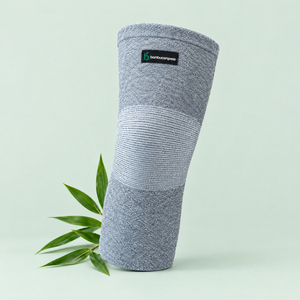
Bamboo knee sleeves are knit from viscose made from bamboo, blended with nylon and spandex for stretch and recovery. The viscose fibre is what gives the fabric its soft, cool hand and better breathability than pure synthetics. For arthritis, that translates into the thing the research keeps pointing at: a sleeve that is comfortable enough to wear all day, at a gentle compression, without heat or itch. The trade-off is that a bamboo knit sleeve offers less rigid support than thick neoprene, so it is not the right choice for heavy squats or a knee that needs bracing.
One label detail worth knowing. In the US, Federal Trade Commission rules require fabric made from bamboo to be labelled "rayon from bamboo" or "viscose from bamboo," because the bamboo is chemically processed into a new fibre. Brands that simply print "100% bamboo" on the label are either careless or hiding a cheaper fibre. Look for "viscose from bamboo" and a stated blend percentage.
How to choose the best knee compression sleeve for arthritis
- Measure before you buy. Wrap a soft tape around the centre of your kneecap with the leg slightly bent and use the brand's chart. If you are between sizes, go up. Most "it slid down" and "it cut off my circulation" reviews come from guessing the size.
- Snug, never tight. You should be able to slide a finger under the top band. Numbness, tingling, a cold foot or a deep ring in the skin mean it is too small.
- Pick breathable fabric for daily wear. If you plan to wear it for hours, a knit sleeve (bamboo viscose or a good nylon knit) will be kinder than neoprene.
- Slim is better under clothes. A low-profile sleeve disappears under trousers and does not bunch when you sit.
- Check the size range. Many sleeves stop at XL. If you have a larger thigh or calf, look for brands that run to 3XL or 4XL with a wider top band so it does not roll.
- Buy two if you will wear it daily. One can be washed and air-dried while the other is on your knee, and the elastic lasts longer when it gets a rest.
How many hours a day should you wear a knee compression sleeve?
There is no fixed rule. Most people wear a sleeve during the part of the day when the knee works hardest: walks, chores, shopping, work on their feet. Wearing it for a few hours at a time, then giving the skin a break, is a sensible default. If it is comfortable you can wear it most of the day. Take it off if you notice numbness, tingling, swelling below the sleeve, or skin irritation, and air-dry the sleeve between wears. Some people also sleep in a gentle sleeve for warmth; if you do, wear your true size and never a smaller one.
When a sleeve is not enough, and who should ask a doctor first
See a clinician before relying on a sleeve if your knee locks, gives way, swells suddenly, is hot and red, or hurts after an injury or fall. Those are not sleeve problems. A hinged or unloader brace, physiotherapy or imaging may be needed. Also check with your doctor before using any compression if you have poor circulation, peripheral artery disease, diabetes with reduced feeling in your legs, a history of blood clots, or fragile skin.
Where our sleeve fits in
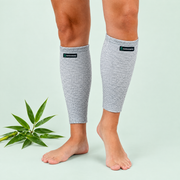
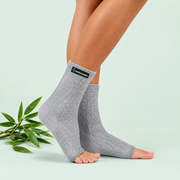
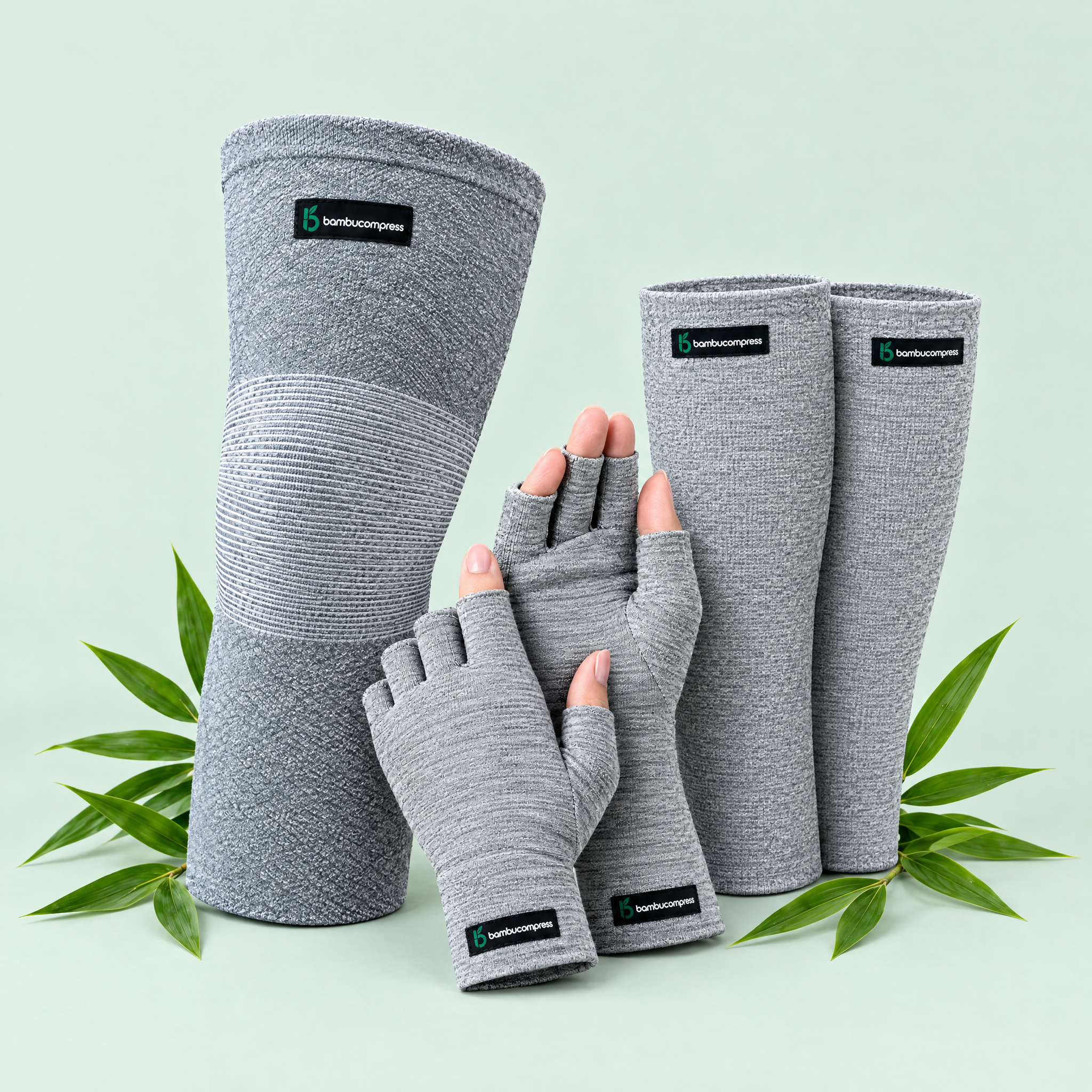
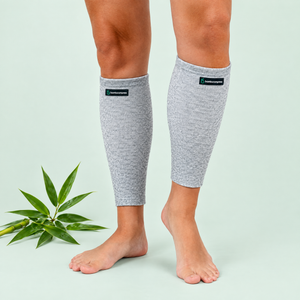
We make the FLEX+ Bamboo Knee Sleeve around the findings above: a soft, breathable viscose-from-bamboo knit, gentle to moderate compression that you can wear all day, a slim fit that stays put under clothes, and sizes from S to 4XL. We do not claim it treats arthritis, because no sleeve does. We think it is the most comfortable option for everyday knee stiffness and aches, and the reviews on the product page are from customers who wear it exactly that way. You can compare it with our calf, ankle and full-leg sleeves in the knee sleeves collection, and every order comes with a 30-day comfort guarantee and easy size exchanges.
Wondering whether you need a brace instead? Read our guide to knee brace vs knee sleeve. For what to do about pain on walks, see knee pain when walking.
Sources
- Hassan BS, Mockett S, Doherty M. Influence of elastic bandage on knee pain, proprioception, and postural sway in subjects with knee osteoarthritis. Annals of the Rheumatic Diseases. 2002;61(1):24-28.
- Kolasinski SL, Neogi T, Hochberg MC, et al. 2019 American College of Rheumatology/Arthritis Foundation Guideline for the Management of Osteoarthritis of the Hand, Hip, and Knee. Arthritis & Rheumatology. 2020;72(2):220-233.
- Richmond SJ, Gunadasa S, Bland M, MacPherson H. Copper bracelets and magnetic wrist straps for rheumatoid arthritis: a randomized double-blind placebo controlled crossover trial. PLOS ONE. 2013.
- U.S. Federal Trade Commission. Tommie Copper to pay $1.35 million to settle FTC deceptive advertising charges. December 2015.
- Mass General Brigham. Knee braces for osteoarthritis: what to look for.
- Cleveland Clinic. Knee braces, sleeves and support: types and how to use.
This article is for general information and is not medical advice. It does not replace an assessment by your doctor or physiotherapist. Read our medical disclaimer.

 Are Bamboo Compression Socks Good? Pros, Cons and How to Choose the Best Pair
 Knee Brace vs Knee Sleeve: Which One Do You Actually Need?
 Do Arthritis Gloves Work? What the Research Says (and What It Doesn't)