




Walk into a chemist or search online and "knee brace" and "knee sleeve" get used for everything from a thin stretchy tube to a rigid hinged frame. They are not the same thing, and picking the wrong one is the most common reason people say "I bought a knee support and it did nothing." Here is the difference between a knee brace and a knee sleeve, who each one is for, and the signs that tell you which you need.
The short answer
A knee sleeve is soft, elastic compression. It warms the joint, reduces mild swelling and gives your knee a steadier, "held" feeling. It is for everyday aches, stiffness, arthritis comfort and support during activity. A knee brace has structure: hinges, straps or a rigid frame that limits or redirects movement. It is for instability, ligament injuries, recovery after surgery, or arthritis that is bad enough to need weight shifted off one side of the joint. If your knee hurts but does not give way, start with a sleeve. If it buckles, locks or was recently injured, you need a brace and a clinician.
What a knee sleeve is
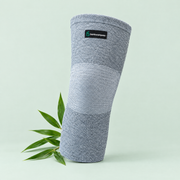
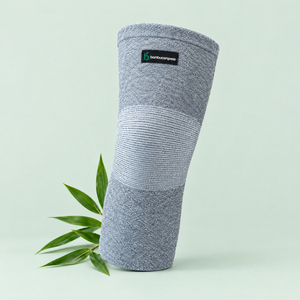
A knee sleeve is a tube of stretch fabric, usually neoprene, nylon-spandex or a viscose-from-bamboo knit, that slides over the knee and hugs it. There is nothing rigid in it. The Cleveland Clinic describes sleeves as the most common knee support people wear, while noting they are not true braces. What they do:
- Compression. Gentle, even pressure that can limit mild swelling and the heavy feeling after a long day.
- Warmth. A warm joint moves more easily, which is why sleeves help most with morning stiffness and cold-weather aches.
- Proprioception. Constant light contact with the skin improves your sense of where the knee is, which many people feel as confidence on stairs and uneven ground.
What a sleeve does not do is control the joint. It will not stop a knee from twisting or buckling, and it will not take load off a worn inner compartment. For a deeper look at the research and materials, see our guide to the best knee compression sleeve for arthritis.
What a knee brace is
"Brace" covers several different devices, and they do different jobs:
- Hinged knee brace. A sleeve or wrap with metal or plastic hinges on one or both sides. Adds side-to-side stability for a knee that feels loose or wobbly, or after a ligament sprain.
- Unloader brace. A longer, rigid brace, often custom-fitted by an orthotist, that shifts weight away from the damaged side of the joint. Providers most often suggest it for knee osteoarthritis that is concentrated on the inner side of the knee.
- Patellofemoral brace or patellar strap. Supports the kneecap and the tendon below it. Used for kneecap tracking problems and jumper's knee.
- Functional brace. Limits excess movement in one direction after an injury such as an ACL or MCL tear, so you can use the knee safely while it heals.
- Immobiliser. A stiff brace that stops most or all movement during recovery from surgery or a fracture.
Because braces restrict movement, they should be chosen with a clinician. The Cleveland Clinic's guidance is direct: wearing a knee brace is not a substitute for seeing a healthcare provider, and a brace should never hurt or make knee pain worse.
Knee brace vs knee sleeve at a glance
| Knee sleeve | Knee brace | |
|---|---|---|
| Structure | Soft stretch fabric only | Hinges, straps, rigid frame |
| Main job | Compression, warmth, proprioception | Stability, limiting or redirecting movement |
| Best for | Arthritis comfort, stiffness, mild swelling, everyday activity, workouts | Instability, ligament injuries, post-surgery, advanced one-sided arthritis |
| Fit under clothes | Slim, disappears under trousers | Bulky; usually worn over tights or shorts |
| Wear time | Hours a day, every day | As prescribed; often activity-specific |
| Who should choose it | You can buy one yourself by measuring your knee | Ask a doctor, physiotherapist or orthotist first |
| Typical cost | £11 to £45 | £40 to several hundred (custom unloaders more) |
Signs you need a knee brace, not a sleeve
- Your knee gives way, buckles or feels loose when you turn or step down.
- You had a recent injury: a twist, a fall, a pop, sudden swelling.
- Your knee locks or catches and will not fully straighten or bend.
- A clinician told you the arthritis is worse on one side of the joint and pain is severe.
- You are recovering from surgery and were told to protect the joint.
Any of those means a sleeve is the wrong tool. See a doctor or physiotherapist, and go promptly if there is severe pain, worsening swelling, bruising or discolouration, numbness or tingling, or you cannot move the knee.
Signs a knee sleeve is enough
- Your knee is stiff in the morning or after sitting, then loosens up.
- It aches after activity: walking, stairs, gardening, bowls, a long shift on your feet.
- It feels puffy or heavy at the end of the day but is not hot or red.
- You want a bit of confidence on stairs and slopes but the knee does not give way.
- You have been told you have mild to moderate osteoarthritis and want a low-risk comfort option.
Should I wear a knee sleeve if my knee hurts?
For the everyday kind of hurt described above, yes, a sleeve is a reasonable thing to try, and it is one of the lowest-risk options there is. Two rules. First, size it properly: a sleeve that is too tight causes numbness and red rings and gets abandoned, and the research on elastic knee supports in arthritis suggests a snug but not tight fit is the one that actually reduces pain. Second, treat it as a comfort aid alongside strengthening exercises and your doctor's plan, not as a treatment on its own. If the pain is new, getting worse, or came with an injury, get it looked at before you buy anything.
When should you not wear a knee sleeve?
- When it causes numbness, tingling, a cold foot or swelling below the sleeve. Take it off and size up.
- Over broken, irritated or fragile skin.
- If you have poor circulation, peripheral artery disease, a history of blood clots or diabetes with reduced feeling in your legs, unless your doctor has approved compression.
- As a way to push through an injury. A sleeve can mask pain that needs attention.
- Around the clock without breaks. Give the skin air and wash the sleeve between wears.
Can you wear a sleeve and a brace together?
Some people wear a thin sleeve under a hinged brace for comfort and to stop the brace rubbing, and some braces are built as a sleeve with hinges added. If your clinician has prescribed a brace, ask them before adding anything underneath, because an extra layer can change how the brace fits and works.
Where our sleeve fits in
The FLEX+ Bamboo Knee Sleeve is firmly in the sleeve category: a soft, breathable viscose-from-bamboo knit with gentle to moderate compression, made for all-day comfort with everyday stiffness, aches and mild swelling. It is not a brace and will not stabilise an injured knee. If your knee simply needs to feel warmer and steadier through the day, it is the one we would reach for; sizes run from S to 4XL, and every order has a 30-day comfort guarantee with easy size exchanges. You can compare it with our other supports in the knee sleeves collection.
Sources
- Cleveland Clinic. Knee braces, sleeves and support: types and how to use.
- Mass General Brigham. Knee braces for osteoarthritis: what to look for.
- Hassan BS, Mockett S, Doherty M. Influence of elastic bandage on knee pain, proprioception, and postural sway in subjects with knee osteoarthritis. Annals of the Rheumatic Diseases. 2002;61(1):24-28.
- Kolasinski SL, Neogi T, Hochberg MC, et al. 2019 American College of Rheumatology/Arthritis Foundation Guideline for the Management of Osteoarthritis of the Hand, Hip, and Knee. Arthritis & Rheumatology. 2020;72(2):220-233.
This article is for general information and is not medical advice. It does not replace an assessment by your doctor or physiotherapist. Read our medical disclaimer.

 Are Bamboo Compression Socks Good? Pros, Cons and How to Choose the Best Pair
 Best Knee Compression Sleeve for Arthritis: Bamboo vs Copper vs Neoprene
 Do Arthritis Gloves Work? What the Research Says (and What It Doesn't)